
Training Course Catalog
Advanced Basic Bloodstain Pattern Analysis
This course was developed for the bloodstain pattern expert to advance their skills in the identification and reconstruction of bloodstain patterns at the crime scene, on articles of clothing, and items of physical evidence recovered from a violent crime scene. The latest research and application of bloodstain evidence will also be a topic for discussion.
The student will also be exposed to mock bloodstain crime scenes, report writing, and utilization of automation, animation, and mannequins for court room demonstrative evidence; as well as participate in a moot court, utilizing their knowledge, skills and abilities as a bloodstain expert.
Advanced Crime Scene Investigations
This comprehensive 40 hour workshop will provide training and assistance in advanced crime scene techniques. This course was developed for detectives in order to advance their skills in the examination of major crime scenes. The latest research and application of new crime scene techniques will be among the topics for discussion. The course includes an overview of how to approach and examine major crime scenes, along with hands-on training and the opportunity to present the physical evidence recovered from mock scenes in a courtroom setting. All advanced instructional techniques will be illustrated with actual case scenarios.
Advanced Forensic Entomology
Designed for individuals seeking detailed guidance on the identification of entomological evidence, interpretation of insect age, and report writing. Students will spend one afternoon in the field, and the remainder of the time will be in a traditional laboratory setting working on taxonomic identification and developmental data interpretation. Students will be required to author a sample report on their analysis of collected entomological samples.
Advanced Forensic Photography
This course serves as a follow up training to enhance the skills acquired in the 3-day Basic Forensic Photography course taught by Robert Wyman
(2-days, as follow-up to Basic Forensic Photography)
• Blood Spatter photography
• Chemical Luminescence Blood Evidence photography
• Alternate Light Source photography
• Projectile Trajectory photography using lasers
• Crime Scene Roadmapping / Sequencing photography
• Autopsy photography
• Utilization of GPS devices with photography
• Scene Measurements and Diagramming with photography
• Preparation of GPS Mapping and Diagramming exhibits
Advanced Ridgeology Science Workshop
This five day course, combines detailed lecture regarding the scientific basis for friction ridge identification with intense latent print comparison practical exercises. The lecture material incorporates the Ridgeology concepts of David Ashbaugh with the practical application techniques developed by Pat Wertheim.
Lectures to improve a student’s overall knowledge of the fundamentals supporting Ridgeology science, the ability to make tough identifications and improve an examiner’s efficiency in doing comparisons include but not limited to recognition of ridge pattern “clues”, identifying which finger or which area of skin made a particular latent impression, the correct use of 3rd level detail the philosophy and “ACE-V” methodology of comparing and identifying latent prints, the fundamental principles of permanence and individuality, a detailed look into the accepted analysis of latent prints, and non-friction ridge skin comparison and identification.
Advanced Shooting Reconstruction
This advanced five day course is designed for crime scene investigators, detectives, crime laboratory analysts and others in the field of forensic science that have the basic training and skills for shooting crime scene examinations. This course will assist law enforcement officers in connecting all of the forensic pieces for the purpose of shooting crime scene reconstruction. A crime scene is a huge puzzle, and piece by piece we compile the physical evidence in each case; the more difficult job is trying to connect those pieces to obtain the big picture, the shooting crime scene reconstruction. This course will also assist in the documentation of physical evidence at the scene which previously might not have been recorded. The attendees will have a brief review of basic techniques and skills that may have been acquired in other courses but will quickly expand their knowledge base and skillset with advanced techniques acquired through lecture and hands-on performance of exercises designed to test the attendees ability to put all the pieces together. At the conclusion of the course the attendees will have acquired the ability to be able to generate a shooting reconstruction report for the purposes of ultimately providing expert testimony. The Mock scenes for this course were specifically designed to assist the attendee in the importance of scene documentation, and to obtain the maximum, accurate information for ultimate shooting crime scene reconstruction. The course will be challenging but will yield the attendee great rewards in advancing their abilities in shooting reconstruction scenes.
Basic Bloodstain Pattern Analysis
This comprehensive 40-hour workshop will provide participants training and assistance in the proper recognition of bloodstain pattern evidence. This includes actual laboratory experimentation of blood flight characteristics of motion and force. These experiments will be augmented with lecture material and case presentations for the ultimate purpose of reconstruction of the sequence of events which occurred at the scene of the crime. This is a hands-on workshop that will allow the participants to work individually and in small groups as they acquire the necessary knowledge and skills required of a bloodstain pattern analyst. The bloodstain evidence that will be analyzed will include that which is present at the crime scene, in or on a vehicle, on a victim and/or suspect’s clothing, or on discarded evidence such as knives, firearms and other weapons.
Basic Documentation, Photography, and Collection of Footwear and Tire Tread Impressions
As investigators, we are taught how to document and collect footwear and tire tread impressions at crime scenes but we are not taught how those techniques affect the comparison results. That is where this class is different than your typical basic footwear and tire tread documentation and collection class. This class will teach the proper skills needed and explain how improper techniques will hinder the comparison results.
This comprehensive 2-day course is designed to give investigators the knowledge and skills needed to properly document, collect and preserve 3D and 2D footwear and tire tread impressions to ensure the best results from the comparison examination. It is intended for new and experienced crime scene investigators and law enforcement officers. This course is a combination of lectures and hands on activities that will cover basic detection, collection and preservation techniques along with tips and tricks for difficult latent impressions that are often found on crime scenes. The hands-on activities will cover a variety of scene scenarios and enhancement processes that can be used on scenes and in the lab. This course will also discuss the importance of proper detection, collection and preservation techniques and how each will affect the comparison examination if not done correctly.
Basic Forensic Entomology
This is a comprehensive workshop in forensic entomology. It details the use of insects in legal investigations, and includes instruction on the proper protocol for the location, collection, and documentation of arthropods that may be found on human remains and the surroundings in a death scene. This one day workshop consists of both lecture and field exercises, with the students being divided into groups of five or six individuals. This is a hands-on course with the afternoon spent in the field. Each student is encouraged to bring a digital camera as the photographs you take are yours to keep and may be good examples for enhancing your training.
Basic Forensic Photography
Instructor: Robert Wyman
This informative 3-day course provides attendees with unique classroom presentations and outdoor hands-on exercises.
This training is designed to assist Crime Scene Investigators, Traffic Crash Investigators, Fire and Arson Investigators, Medical Examiner staff, and Local Government Code-Compliance officials to accurately document assignments they are faced with in their respective investigative professions.
There are many elements involved with assembling a forensic puzzle for an investigation, and in many cases forensic photography can make or break your case. This course stresses the importance of properly documenting your incident scene.
Course topics are purposely structured to be basic, entry-level presentations for inexperienced or “point-and-shoot” photographers, moderately-experienced photographers with some training, as well as experienced photographers looking for a refresher course or some new ideas.
Although these photographic subjects will be matched to real- world forensic documentation assignments, this course is not intended to cover every possible assignment. Instead, the emphasis is on learning how to get the most out of your equipment and to establish modern photographic procedures applicable to your cases.
This class will emphasize the “Exposure Triangle,” image composition, and choosing the right camera tools for any documentation task. Outdoor photo exercises will also be conducted, weather permitting.
Course Topics:
The Importance of evidence photography; professional policies, procedures and SOP’s
Camera and lens operation, settings, options and handling
Camera add-on equipment to enhance your forensic images
Mastering the selection of camera modes
The Exposure Triangle: Shutter Speed, Aperture and ISO settings
Indoor flash photography: Shadows, Confined spaces, Other circumstances and additional lighting techniques related to evidence documentation
Close-Up/Macro photography
Utilization of scales, markers and other measuring devices
Photographic workflow: Image metadata logs, Photo logs and organization, Image archives, Recommendations toward testimony about photography
Basic to Intermediate Fingerprint Comparison Techniques
This 5-day, course provides in depth information on what friction ridge skin is, the history of discoveries made in the comparison of friction ridge skin, comparison methodologies, beginner and intermediate comparison concepts, and important terminology used in the ridgeology science. This course also discusses court testimony on latent print comparisons, early and famous court cases involving latent print examinations, along with practical exercises designed to reinforce the material and techniques presented. The exercises build the beginner examiner’s skills and reinforce the intermediate examiner’s skills through the course from looking for differences and tenprint comparisons to basic comparison techniques for latent finger and palm prints as well as orientating palm prints and enhancing difficult prints. This class is ideal for beginner tenprint and latent print examiners who are just starting out in the field or those examiners who want a refresher on the basics and some intermediate level comparisons. This course will provide the student with knowledge of the history behind the ridgeology science and a good introduction to comparing friction ridge skin. Lectures combined with a wide range of practical exercises designed to provide knowledge of the fundamentals supporting ridgeology science, basic to intermediate comparison techniques, and court testimony will be presented throughout this course.
Buried Body & Surface Skeleton
This comprehensive 40 hour course is designed for crime scene investigators, detectives, crime laboratory analysts, and others in the field of forensic science that need the basic training and techniques for buried body or surface skeleton crime scene examinations and recoveries. Mock scenes for this course are designed to assist the student in understanding the importance of scene documentation, and to obtain the maximum amount of accurate information for ultimate crime scene reconstruction of both surface skeleton cases and more complex buried human cases. Attendees will be assigned to a crime scene team and will be responsible for the entire scene investigation and the presentation of their findings on the final class day. The teams will be graded on the amount of physical evidence (clues) that they recover from their scenes. The attendees will have a working knowledge of the techniques required to examine a surface skeleton and a buried body crime scene; this includes protocols, potential physical evidence awareness, equipment needs, bone identification and inventory, preservation of human remains procedures, search and documentation techniques, and courtroom case presentation experience. Please note that composite skeletons are buried and recovered for the hands on mock scene exercises.
Child and Infant Death Investigations
This course is designed for crime scene technicians and investigators. All levels of experience will benefit from this training as we cover the topic of child and infant death investigations. The presentation will cover medicolegal, crime scene, and autopsy finding aspects of the subject. We will specifically discuss scene processing, evidence collection and investigative techniques as they relate to child death investigations. Child and infant death investigations require a unique approach and can be complicated for even the most seasoned investigator. The training will thoroughly cover the numerous aspects of these investigative cases and promote critical thinking and evaluation of these crime scenes and all the puzzle pieces to help delineate homicides from accidental and natural deaths, even in the most subtle of cases. Actual case scenarios will be presented with attendees solving the case in small working groups with hands-on review of actual forensic materials. Attendees are encouraged to bring a challenging case to discuss with the class and the experts. It is always helpful to have fellow professionals look at your tough cases with a fresh set of eyes. By attending this training you will glean from the presentation of this complex subject and expand your knowledge in this area!
Cold Case Investigation
This course was developed for investigators, or potential cold case investigators, in order to establish proven protocols and methodology in cold case investigation. This course will aid in administrative organization and development of a cold case team. Some topics to be discussed include creating a tracking system for multiple open cold cases, providing new investigative steps, critical forensic evidence review, and reconstruction of the cold case to a point of successful resolution. Hands on practical exercises provide the students with a better understanding of these protocols and methods, and will reinforce the classroom discussions.
Students may bring one cold case for group review.
Courtroom Testimony: A Practical Approach
This three-day course is designed for crime scene investigators, detectives, crime laboratory analysts and others in the field of forensic science that routinely get called to testify in court. The class will be interactive and challenge students to think of scenarios. Methods of how to make a good first impression will be presented along with how to overcome anxiety for students who may experience that. Preliminary information such as a proper pretrial checklist will be presented. A discussion of how to handle adversity from attorneys both during direct and cross examination will help prepare students on how to handle these situations. Both verbal and non-verbal communication techniques will be discussed. Depending on the audience, a discussion of how to present technical information to a lay audience will be discussed along with the Frye and Daubert standards for expert testimony. A list of difficult questions encountered in court along with possible answers will be discussed among the class. The second day will be very interactive, and the students will be placed in groups and asked to testify in a moot court scenario.
Crime Scene Investigation
The number one reason why most crime scene investigations fail is because of inadequate crime scene processing. Working a crime scene, whether minor or major, is a process that involves a wide range of skills. This five day course was developed as a new or refresher workshop for crime scene investigators, or for the new officer with limited exposure and experience in crime scene processing. The detection, collection, documentation, and preservation of physical evidence are key elements involved in every crime scene. This course will assist in the development of new techniques involved with crime scene examination and can elaborate on those already obtained. Forensic science is a field forever evolving and advancing; new techniques and equipment are constantly being developed to assist the law enforcement officer with the challenges of the “every scene, every time” concept.
Crime Scene Reconstruction
This comprehensive 40-hour course is designed for crime scene investigators, detectives, crime laboratory analysts, and others in the field of forensic science that have the basic training and skills for crime scene examinations. Documentation of physical evidence at the scene, bloodstain pattern ID, major crime scene disasters, buried body and surface skeleton recovery, and shooting reconstruction techniques will be some of many topics discussed. Mock scenes for this course are designed to assist the student in understanding the importance of scene documentation by providing hands on experience with crime scenes that require the skills discussed during the course, such as collecting the maximum amount of accurate information and physical evidence for ultimate scene reconstruction.
Firearms for the Detective and CSI
This is a unique three-day class designed to familiarize crime scene investigators, detectives, and possibly even attorneys on the field of firearm examination. This class will offer insight into the scope of services provided by most forensic firearms labs. The range of conclusions and practical considerations of what the analysis means will be discussed. Techniques on how to properly collect and document firearms related evidence at the crime scene will be presented. Safety considerations and rendering firearms safe will be discussed and, if permitted, examples will be available for the student to practice on using dummy rounds. Using fired cartridge cases and bullets, this course will give attendees the ability to recognize what firearms may be associated with shootings in the field before the evidence is sent to the Crime Lab to be analyzed by Firearms Examiners. Workshop attendees will be given the opportunity to practice this in the workshop and will be able to keep some of the exemplars for future reference. Bullet impacts, ricochets, ejection patterns, and other on scene considerations for the firearm examiner will be discussed and practiced on the range in live fire exercises. This training will also cover firearms operability in specialty types of investigations such as those regarding self-inflicted gunshot wounds, police involved shootings, and self-defense cases. This class will provide the attendees with invaluable information that can directly impact their ability to solve their cases.
Forensic Case Consultation and Services Offered
Private consultation and case review for:
• Law Enforcment Agencies
• Attorneys
With many years of accumulated experience specializing in forensics and in law enforcement, Forensic Pieces continues to lend expertise to case review and independent case work for attorneys and agencies. If you would like an expert analysis regarding your case, please contact the office of Forensic Pieces for more details and fee schedule.
Forensic Pieces is now offering drone services of FAA part 107 licensed pilot, Brad Merrell! With ever-increasing use of drone technology in everyday life, specifically the further use of these Unmanned Aerial Vehicles (UAVs), in our exciting field of forensics, drones are swiftly becoming an invaluable tool in crime scene investigations, insurance claim inspections, as well as traffic accidents. Drone pilots can assist in safely and effectively giving the investigator the ability to provide a birds’ eye view for further insight to an overall scene, while adding depth and perspective to assist in finding the forensic answers they seek. The following applications of these services can be provided in order to enhance your investigation today:
• Crime Scene Documentation – Provides a complete visual of a crime scene. This type of documentation can be useful in automobile accidents as well as many other crimes
• Environmental Crime Photography – Drone photography and videography can assist in vandalism, arson or other types of environmental criminal activity
• Fire Scene investigations – Can provide photography as overall views in unsafe conditions
• Evidence Preservation – Instead of damaging valuable evidence, in many instances, drones can be sent in with minimal contact to help keep a scene pristine for smaller items of evidence
• Aerial Views – Scene directionality that offers multiple perspective of commercial, industrial and residential locations
• Cost-Efficient Surveillance Techniques – Eliminates the need for helicopters to provide an aerial view of a location
• Rapid Response – Drones can cover inaccessible areas to help search for individuals in or around difficult regions, cutting down on search time while assisting in search and rescue operations
• Structural damages – Helpful in overall viewing of properties going through insurance claims due to structural issues
• Tropical storm or hurricane damage to properties – Can be used to document damage caused by storms for insurance claims
• Landslide or mudslide documentation – Useful for unsafe areas in the environment and provides an aerial view of any damage
Please call our office at (850) 332-0141 today for a consultation, options for services and pricing as it may vary per the needs of each project. We look forward to hearing from you today!
Forensic Examination of Violent Crime Scenes
When tasked with processing violent crime scenes, it’s important to approach each scene as if it’s a puzzle in need of solving. What pieces are missing? Which hypotheses make sense and which do not? Which pieces need to be kept to complete the full picture, if not now perhaps in the future? It may be hard to believe but the number one reason why most crime scene investigations fail is due to inadequate crime scene processing and analysis. The detection, collection, documentation, and preservation of each piece of physical evidence, especially in violent crime scenes, are integral parts of each and every crime scene investigation. The forensic puzzle can never complete without these pieces that are so important to both the crime scene investigation and analysis of cases. With this in mind, the goal of this interactive 24-hour course is to train the Investigating Officer in the areas and skills needed to process a violent crime scene or homicide. This course will include actual case studies as well as hands-on exercises. Upon completing this course, those in attendance should possess the skills necessary to efficiently and comfortably process a violent crime scene as well as to accurately collect a variety of items of physical and trace evidence.
Forensic Impressions Documentation & Recovery
This interactive and comprehensive 24-hour workshop will provide participants critical training in the proper recognition, documentation and recovery of invaluable forensic impression evidence that may be left at a crime scene. This course will include hands-on practical exercises on the proper techniques of collection and documentation of impression evidence with the purpose of enhancing the investigators skills to properly complete during their crime scene analysis. These hands-on exercises will be augmented with actual case and lecture material as well as a court-presentations for the ultimate purpose of completing the forensic puzzle. On the chance that this evidence is available at the scene, when it is collected, documented and stored properly could be the pieces needed to solve the case. This hands-on workshop will allow the participants to work individually and in small groups as they acquire the necessary knowledge and skills required of a crime scene technician to properly collect and document impression evidence. The impression evidence that will be analyzed will include many types of scenarios and surfaces that it can be collected from.
Forensic Laboratory Analysis
Forensic Pieces provides the forensic evaluation of evidence from criminal cases. We can offer a review of investigative procedures as well as an expert analysis of specific physical evidence. From latent print processing to DNA analysis, the expertise of the professional services are offered as needed. To better assist our clients, our on-site facilities include a private DNA screening lab and Fingerprint lab.
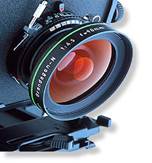
Forensic Pieces announces a new service now available to Forensic Investigations!!
Do you have a case where the suspect or victim was wearing dark colors and you want to see the hidden evidence and can’t? We use the newest technology available using (IR-UV) Infrared Red and Ultra Violet photography with specialty filters to visualize the evidence thus revealing patterns, which may include gunshot residue, blood stain pattern or other evidence. Any of these types of evidence will be noted and marked in photographs revealing areas of concern.
Forensic Pieces will arrange to come to your agency or you may submit evidence to our new laboratory. A report will be generated as well as photographs to document any visualized evidence. All items of evidence will be maintained with the proper chain of custody.
If you would like more information about laboratory analysis of evidence for criminal cases. Please contact the office of Forensic Pieces for more details and fee schedule.
IAI Crime Scene Certification Preparation CCSI, CCSA & CSCSA
This 28-hour course is specifically designed with the goal of enabling students to pass whichever level of the crime scene certification level examination that they are preparing to become certified for in the near future. This is a concentrated and rapidly-moving review of either two or three books (depending on the examination that you are testing to pass). Each book review will have numerous pre-testing examinations composed of hundreds of extracted questions covering every chapter so that students attending will know their areas of strengths and weaknesses to focus on. Whether novice or experienced, this class is a must for maximizing the chances of successfully passing the examination to improve your credentials and professionalism by becoming certified in the crime scene specialty. Students who attend this course will have a distinct advantage over those who have not attended this dedicated and intensive review course when it comes to testing for IAI certification examinations. Please be aware that the tuition fee listed above covers only the Forensic Pieces course tuition. Examination and application fees are to be handled with the IAI. The International Association for Identification Crime Scene Certification Board will work with the hosting facility to facilitate a proctor to be present for the last day of class in order for the students to sit for the examination. If you plan to take the test after this course, you must have your application submitted to the IAI and approved at least 30 days prior to taking the exam and should be familiar with the application requirements that can be found at the following link: Crime Scene - International Association for Identification THIS COURSE IS A BOOK REVIEW. In order to maximize benefits from taking this course, any registrant must read & bring each book used as of for the module being tested or studied for (IAI update made 4/1/2026) Please view manual on pages 41-42 for current literature:
CERTIFIED CRIME SCENE INVESTIGATOR (CCSI)
Practical Crime Scene Processing and Investigation, 3rd edition, by Ross M. Gardner, 2019, CRC Press. Read ALL chapters.
Crime Scene Photography, 3rd Edition, by Edward Robinson, 2016, Academic Press Elsevier, Inc. (All chapters and glossary EXCLUDING chapters 8, subchapters 9.4, 9.6, 9.7, 9.8, and
chapters 10-12).
CERTIFIED CRIME SCENE ANALYST (CCSA)
Practical Crime Scene Processing and Investigation, 3rd edition, Ross M. Gardner, 2019, CRC Press. Read ALL chapters.
Crime Scene Photography, 3rd Edition, by Edward Robinson, 2016, Academic Press Elsevier, Inc. (All chapters and glossary EXCLUDING chapter 8, subchapters 9.4, 9.6, 9.7, and chapters 10 & 11).
Practical Analysis and Reconstruction of Shooting Incidents, Second Edition, Edward E. Hueske, 2021, CRC Press (All Chapters & Glossary EXCLUDING 2, 14, 18, and 20).
CERTIFIED SENIOR CRIME SCENE ANLAYST (CSCSA)
Crime Scene Photography, 3rd Edition, by Edward Robinson, 2016, Academic Press-Elsevier, Inc. (All Chapters EXCLUDING 1, Subchapters 9.4, 9.6 and 9.7, and Pages 712-735)
Effective Expert Witnessing: Practices for the 21st Century, 5th ed. By Matson, Jack V., 2013, CRC Press (All chapters EXCEPT 8 and 9).
Forensic Science: An Introduction to Scientific and Investigative Techniques, 4th edition by James, Stuart H., Nordby, Jon J., and Bell, Suzanne, 2013, CRC Press.
IF YOU NEED CLARIFICATION ON ANY READING MATERIAL AS LISTED ABOVE, PLEASE CALL THE IAI DIRECTLY AT (954) 589-0628
Low Light, Night, and Inclement Weather Photography for Crime Scene and Traffic Investigators
This exciting training opportunity is a 8 – hour presentation at night focusing on several techniques for low light, night and inclement weather photography. It will cover basic camera settings and functions, ambient light photography and different types of inclement weather photography, as well as use of smart phones to enhance photography in these types of conditions. These and many other important techniques taught in this course are meant to be used by traffic investigators and crime scene investigators that are required to take quality photographs in tough lighting situations. The first half of class is to be conducted at the hosting agency in a classroom setting while the second will be held at a nearby location for several thought-provoking and engaging field exercises that practice different lighting and photography techniques in difficult photo-taking scenarios.
Shooting Reconstruction
This comprehensive five day course is designed for crime scene investigators, detectives, crime laboratory analysts, and others in the field of forensic science that have the basic training and skills for crime scene examinations. This course will assist law enforcement officers in connecting all of the forensic pieces for the purpose of crime scene reconstruction involving shooting incidents. It will also elaborate on the thorough and accurate documentation of physical evidence at the scene. The attendees will learn protocol and methods by using string, dowel rods, scientific calculators, and/or lasers to determine the flight path of the projectile from the moment it leaves a firearm muzzle to the moment it strikes the final target and is recovered. Also, students will examine the firearm residue for estimated distance determination from the position of the shooter to the victim and/or final target. Mock scenes are designed for the course to assist the student by providing hands-on experience with the concepts learned throughout the lectures and discussions.
Staged Crime Scene Investigations
Any deliberate effort made by an offender before police arrive to alter the pristine condition of a crime scene to purposely thwart the investigation and frustrate the overall criminal justice process is the essence of crime scene staging. Crime scene staging could be increasing due to public fascination with crime scene related media, enhanced awareness of forensic science application, and/or offenders’ belief in their understanding of how crime scenes should look. This comprehensive, 24-hour course is designed for crime scene investigators, detectives, crime laboratory analysts, and other forensic professionals involved in crime scene examination related work. This course explores what is known about crime scene staging and instructs students on how to use a new methodology for the early detection and analysis of potentially stated crime scenes. This course also integrates critical documentation techniques used to create a permanent record of bloodstain pattern evidence and/or firearms-related incident evidence for the purpose of a comprehensive, multi-disciplinary crime scene reconstruction towards supporting or refuting claims made by a would-be crime scene stager.